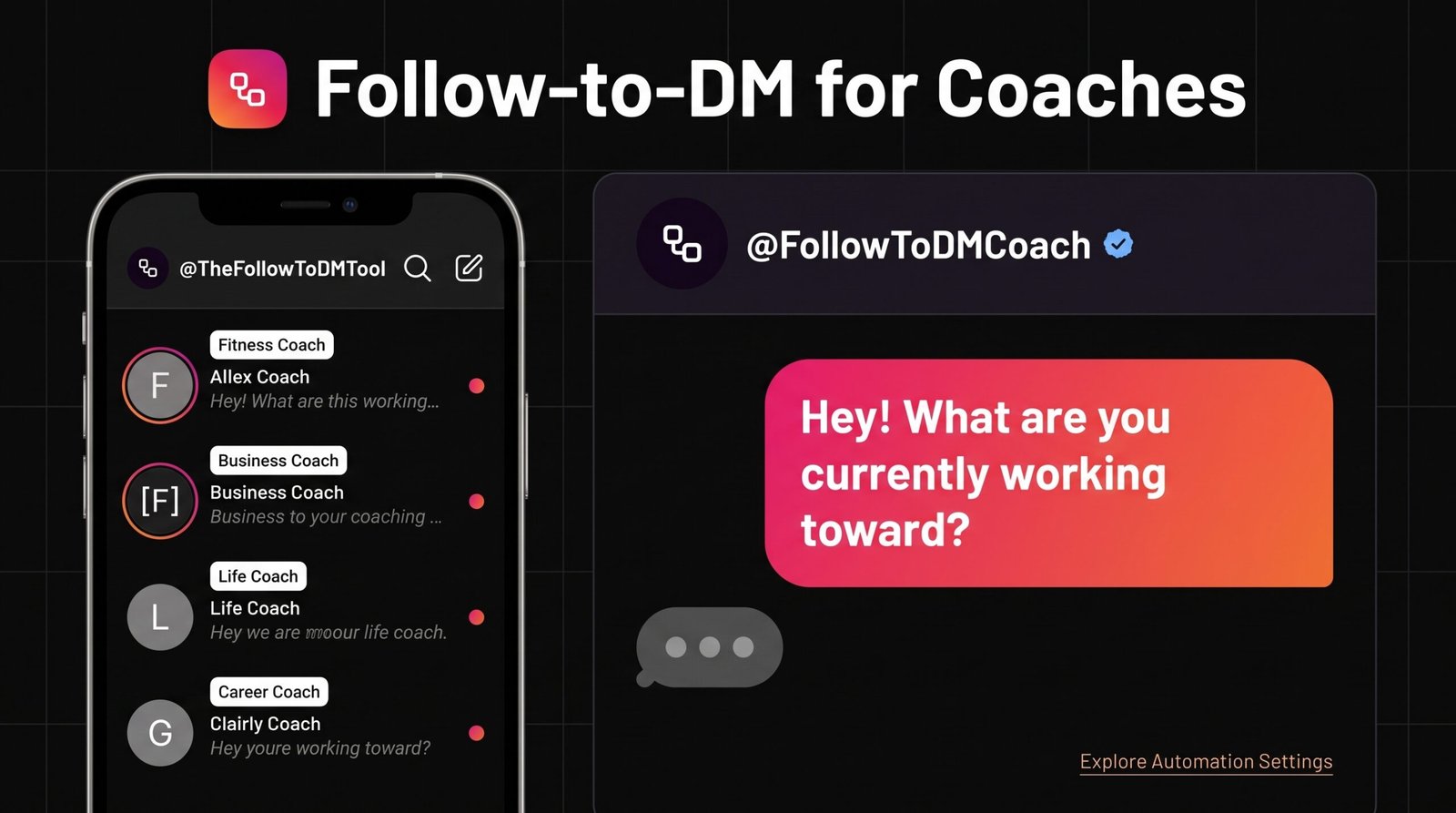
Coaches on Instagram
20 Instagram Follow-to-DM Examples for Coaches
Real, copy-ready DM templates for life coaches, fitness coaches, business coaches, and more. Organized by niche, with notes on what makes each one work.
When someone follows your coaching account, they are telling you something: they saw your content, they liked what they found, and they are at least a little curious about what you do. That moment is the highest point of interest they will ever have in you as a stranger. Therefore, what you say in the next hour matters more than almost any other marketing move you can make.
The problem most coaches run into is that they either say nothing at all or they open with something that immediately reads like a sales pitch. Both approaches waste the opportunity. Instead, a good follow-to-DM message does one thing: it starts a real conversation with someone who is already interested.
How to Use These Templates
Every template below is a starting point, not a script. Read the “why it works” note under each one and adapt the language to match your actual voice. The goal is a message that sounds like you wrote it at that moment, not something that looks like it came out of an automation tool. Personalization is always what separates a reply from a read-and-ignore.
The Message
“Hey [name]! Thanks for following. Curious, what’s the one area of your life you feel most stuck in right now? No pressure, just genuinely wondering what brings people here.”
Why it works: It asks a meaningful question that feels personal without being intrusive. Most people who follow a mindset coach already have something specific on their mind. In addition, the “no pressure” line removes the feel of a survey and makes it sound like a real conversation starter.
The Message
“Welcome! I put together a quick guide on the three mental blocks that hold most people back from real change. Want me to send it over? It’s free, no strings.”
Why it works: It leads with a gift rather than a question about them, which can feel lower-friction for introverted followers. Furthermore, saying “no strings” preemptively removes the sales alarm people have when coaches offer free things.
The Message
“Hey, glad you’re here! Most people who find my page are at a turning point in some way. Does that sound like where you’re at, or did you find me through something specific?”
Why it works: It validates the emotional state your ideal client is in without being presumptuous. The second part gives them an easy out if they want to share context rather than just yes or no. As a result, you learn something useful about how they found you and what they are looking for.
The Message
“Hey! Was there a specific post or reel that brought you here? Always curious what actually resonates with people vs what I think will.”
Why it works: This one does double duty. It starts a conversation and gives you genuine content feedback. The self-aware second sentence makes you sound human and grounded rather than polished, which builds trust faster with the mindset-focused audience.
The Message
“Hey [name]! Welcome to the page. What are you currently training for? Fat loss, muscle, performance, or just generally feeling better? No wrong answer.”
Why it works: Fitness followers almost always have a specific goal in mind. This message surfaces that goal immediately and helps you qualify whether they are a fit for your coaching service. Furthermore, giving them four options makes it easy to reply with just one word, which dramatically increases your reply rate.
The Message
“Hey! Quick question, where are you in your fitness journey right now? Just getting started, been at it for a while but stuck, or somewhere in between?”
Why it works: It meets people wherever they are without judgment. The “somewhere in between” option is important because it makes hesitant repliers feel like they do not have to perfectly categorize themselves. This usually gets a longer, more detailed reply than a binary question would.
The Message
“Welcome! I’ve got a free 5-day meal prep guide that I send to new followers. Want it? It’s the same framework I use with my 1:1 clients.”
Why it works: The phrase “same framework I use with my 1:1 clients” elevates the free offer and positions it as something valuable rather than throwaway lead-gen content. In addition, it naturally introduces the existence of your paid coaching without explicitly pitching it.
The Message
“Hey, glad you found the page! What’s been the hardest part of staying consistent for you? I ask everyone this because the answers always surprise me.”
Why it works: Consistency is the universal pain point for fitness followers. By naming it directly, you signal that you understand their struggle before they even tell you about it. The “answers always surprise me” line makes it feel like genuine curiosity rather than a sales qualification call.
The Message
“Hey [name]! Welcome. Are you just starting your business, already running something and trying to grow it, or somewhere in between? Trying to figure out who I’m actually talking to on here.”
Why it works: Business coaches serve wildly different audiences depending on the stage of business. This message qualifies the lead immediately without sounding like a sales call. The last sentence is key because it frames the question as curiosity about your audience rather than a discovery call screening.
The Message
“Hey! Thanks for the follow. What’s the one thing in your business right now that feels like it should be working but isn’t?”
Why it works: This is one of the most powerful coaching questions you can ask because it surfaces a real, specific frustration. People who have been quietly struggling with something will often open up completely in response to this. As a result, your very first DM exchange gives you enough context to have a genuinely useful conversation.
The Message
“Hey! Welcome. Are you using Instagram for your business or just here to learn? Either is totally fine, just curious what you’re working on.”
Why it works: It immediately differentiates between followers who want to learn and followers who are potential clients for Instagram or social media strategy services. Furthermore, the “either is totally fine” removes any awkwardness for people who are just browsing, which paradoxically makes them more likely to tell you the truth.
The Message
“Hey [name]! Quick question, what’s the biggest bottleneck in your business right now? Leads, sales, systems, team, or something else entirely?”
Why it works: Giving specific options (leads, sales, systems, team) shows that you actually understand the range of challenges business owners face. In other words, it signals expertise before you have said anything about your services. The “something else entirely” option keeps the door open for people whose problem does not fit neatly into a category.
The Message
“Hey! Glad you’re here. No need to share anything personal, but I’m curious what brought you to the page. Relationship stuff, communication, or something else?”
Why it works: Relationship topics are sensitive and people are often guarded about them. The “no need to share anything personal” opener removes the vulnerability barrier and paradoxically makes them more likely to open up. It signals that you understand the emotional weight of what they might be dealing with.
The Message
“Hey [name], welcome! Are you happy in your career right now or in the middle of figuring out what’s next? I find most people land in one of those two camps when they find my page.”
Why it works: It frames their situation without judgment and makes them feel understood before the conversation even starts. The observation at the end (“I find most people land in one of those two camps”) makes you sound experienced and perceptive, which builds immediate credibility as a coach.
The Message
“Hey! Thanks for the follow. Are you a manager or team lead trying to get better at leading people, or more of a solo operator working on your own leadership presence?”
Why it works: Leadership coaching attracts two very different profiles: those managing teams and those building personal authority. This message immediately sorts between them and shows that you understand the difference, which signals real depth of expertise in the first ten words.
The Message
“Hey! Are you in the middle of any kind of transition right now, job, relationship, direction? That’s usually what brings people to accounts like mine.”
Why it works: Coaching in general attracts people who are in motion, not people who are fully settled. This message names that reality and makes the follower feel like you see them clearly, even before knowing anything specific about them. Furthermore, listing three types of transitions casts a wide enough net to be relevant to most of your audience.
The Message
“Hey [name]! What are you working on right now?”
Why it works: Sometimes the shortest message wins. This question is open-ended enough that anyone can answer it, regardless of what they are going through. It is so simple that it does not read like automation at all. In addition, it gives the follower total freedom to steer the conversation wherever feels most relevant to them.
The Message
“Hey, welcome to the page! If there’s one thing you’re hoping to get better at this year, what is it?”
Why it works: The warm greeting followed by a forward-looking question is a classic coaching frame: it anchors the conversation in aspiration rather than problem. People find it easier to talk about what they want than what is wrong. As a result, you tend to get more energized, optimistic replies that are easier to continue.
The Message
“Hey [name]! Genuinely appreciate the follow. What kind of content do you find most useful on here? I’m always trying to make sure I’m actually putting out stuff that helps.”
Why it works: Asking for their input makes them feel like a collaborator rather than a spectator. Furthermore, it positions you as someone who creates content intentionally and with their audience in mind, which is a strong credibility signal. You also get real content feedback as a bonus, making this one of the most useful DMs you can send for your own strategy.
The Message
“Hey! You’ve been following for a bit now. Just wanted to check in. Is there anything specific you’ve been looking for that you haven’t found yet?”
Why it works: This one is for followers who have been around for a while without engaging. It is honest, low-pressure, and signals that you actually notice your audience as people rather than just numbers. People who have been quietly lurking often respond well to this because it feels like a genuine check-in rather than a pitch.
What Makes a Coaching DM Actually Get a Reply
Looking at the 20 templates above, a few patterns show up consistently in the ones that perform best. Understanding these patterns helps you write your own messages when the templates do not quite fit your voice or niche.
🎯
One question only
Every high-performing DM ends with one question, not two or three. Multiple questions make people feel like they are filling out a form. One question feels like a conversation.
✏️
Short sentences win
Welcome DMs that run longer than three or four sentences see noticeably lower reply rates. The longer the message, the more it reads like a broadcast. Keep it tight and the other person has room to contribute.
🚫
No pitch in the first message
Mentioning your program, offer, or service in the very first DM is the fastest way to get ignored. Lead with curiosity or value. The offer comes later, once there is an actual conversation happening.
⏱️
Timing matters more than copy
The same message sent within an hour of a new follow gets far more replies than the same message sent two days later. Speed is therefore more important than perfection in the wording.
What to Avoid in Coaching Welcome DMs
Just as important as what to say is what not to say. These are the patterns that consistently kill reply rates for coaches, even when the offer is genuinely good.
Avoid This
- Opening with your credentials or bio summary
- Mentioning a discovery call in the first message
- Dropping a price or program link immediately
- Using exclamation points on every sentence
- Asking two or more questions at once
- Starting with “I” instead of “Hey” or their name
- Writing more than four sentences total
Do This Instead
- Open with their name or a casual greeting
- Ask one genuinely curious question
- Offer something useful before asking for anything
- Reference your niche naturally through what you ask
- Keep the tone warm but not hyper-enthusiastic
- End with something easy to reply to in one or two words
- Let the conversation develop before mentioning your offer
How to Send These DMs to Every New Follower Automatically
If you are picking up five or ten new followers a day, sending a welcome DM manually is doable. However, if you are running ads, going viral occasionally, or growing faster than that, you will inevitably miss people. Furthermore, the timing problem becomes impossible to solve manually since you obviously cannot be monitoring your followers list around the clock.
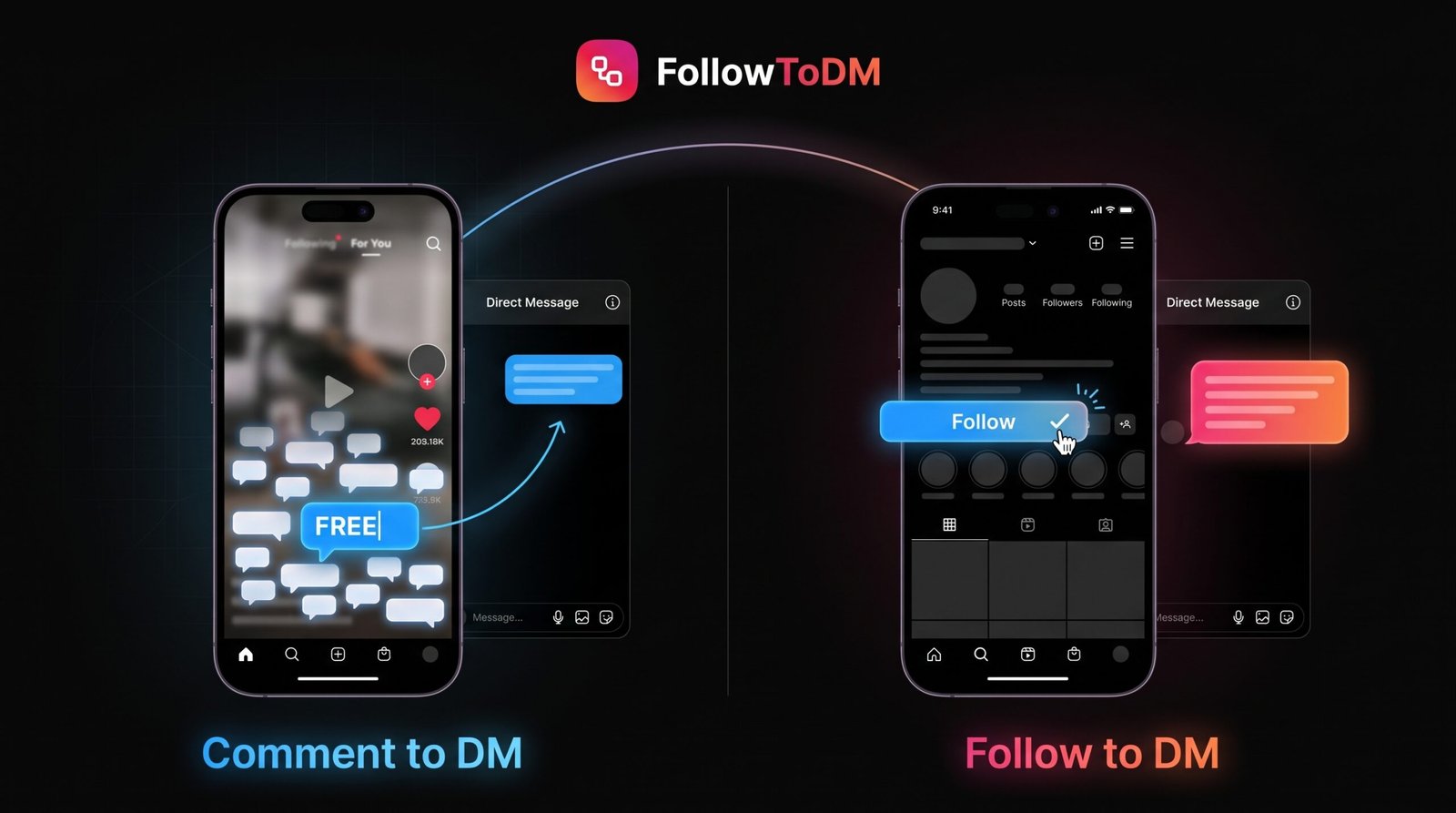
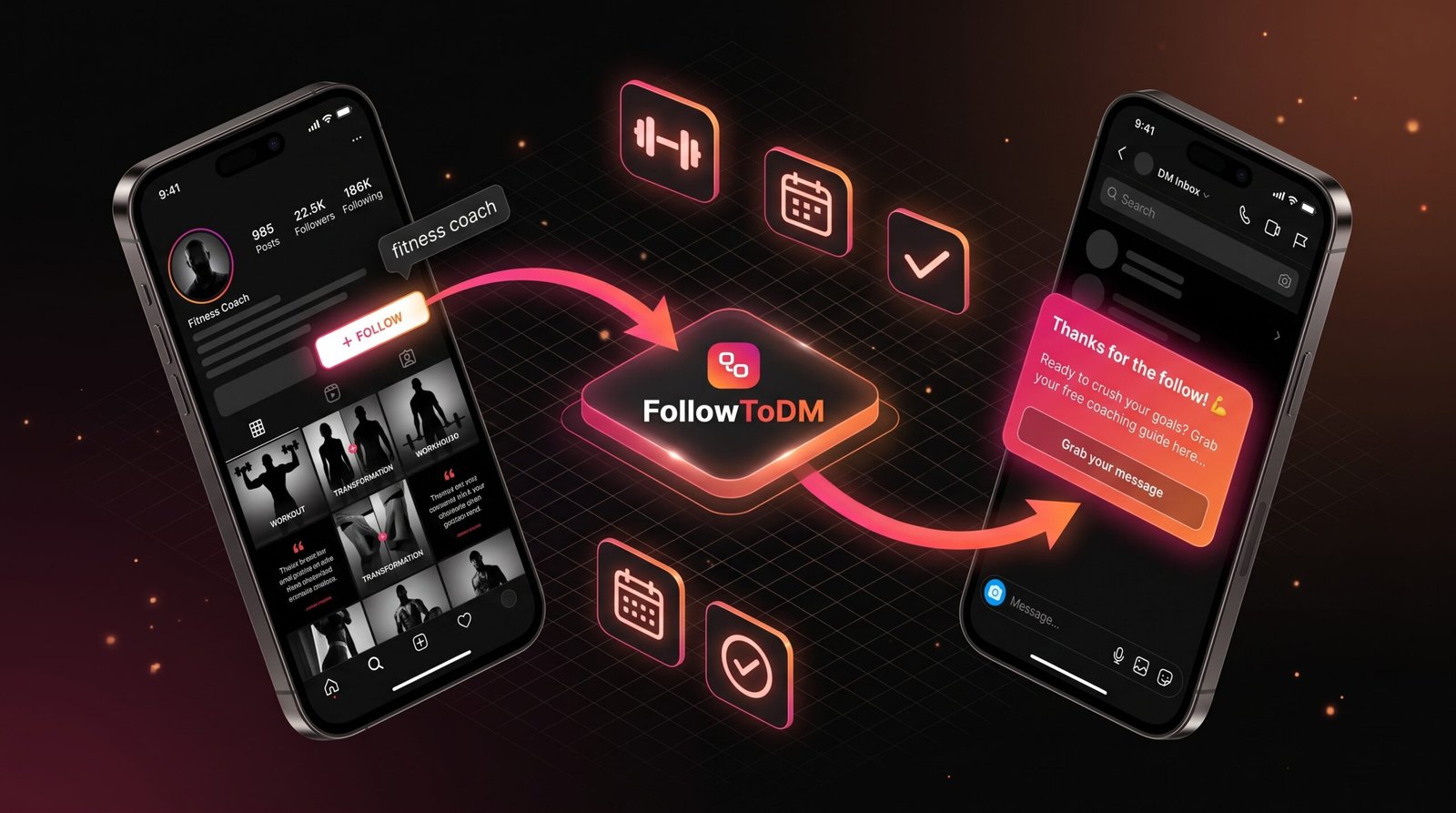
That is the exact problem FollowToDM is built to solve for coaches and creators.
For a deeper look at how automation fits into a coaching DM strategy, check out the guide on how to convert Instagram followers into clients and the full breakdown of how to send welcome DMs to new Instagram followers.
Frequently Asked Questions
QIs it weird to DM every new follower as a coach?
Not at all, it is actually expected. People who follow coaches are often looking for engagement and community, not just content to scroll past. A genuine welcome DM signals that you are active and care about your audience. The only time it feels weird is when the message is obviously templated, too salesy, or arrives several days after they followed.
QWhat do I say if someone replies to my welcome DM?
Keep the conversation going naturally. Ask a follow-up question based on what they shared, offer a useful resource relevant to their specific situation, or share a story from your own coaching experience that relates to their answer. The goal is to have a real exchange first. Move toward your offer only when the conversation has reached a point where it is genuinely relevant to what they told you they need.
QCan I send the same DM to every follower or should I personalize each one?
A consistent base template is fine and actually necessary at scale. However, even minor personalization makes a big difference in reply rates. If you can reference their name, their bio, or something from their content, do it. With automation tools like FollowToDM you can use variables to insert names automatically, which adds that personal touch without requiring you to manually write every message.
QHow many follow-up messages should I send if someone does not reply?
One follow-up is appropriate, sent around three to five days after the original message. After that, leave it. Sending more than two unanswered DMs to someone who has not replied comes across as pushy and can get your account flagged. Instead of chasing non-responders, focus on re-engaging them through your public content so they see your value organically and reach out on their own terms.
QWill sending DMs to new followers get my account flagged by Instagram?
Not if you are doing it reasonably. Instagram monitors for spam patterns: sending identical messages to large numbers of people in a short window, getting your messages marked as spam, or having unusually low reply rates are the main risk signals. Tools like FollowToDM handle this by spacing out messages with random delays and keeping volume at natural levels. You can also learn more about why Instagram DM tools get accounts flagged and how to avoid those patterns.
Automate Your Coaching Welcome DM
Pick one of the templates above, set it up once in FollowToDM, and let it go out to every new follower automatically. You handle the conversations.
Try FollowToDM Free